2 Oct 2026
Regulatory Shifts Fueling Boundary-Free Gambling Platforms Across Europe

European gambling markets continue to evolve through coordinated policy adjustments that reshape operator requirements and user access patterns, with data from the European Commission showing incremental harmonization efforts across member states since the early 2020s. These developments stem from updates to cross-border service directives that allow platforms greater flexibility in structuring wagering environments without strict deposit caps or session limits in certain jurisdictions.
Key Policy Adjustments Across Member States
Germany introduced revised interstate treaties that took effect in phases through 2025, permitting operators to offer higher-stake options once licensing thresholds are met while maintaining consumer protection frameworks enforced by state authorities. Similar adjustments appeared in the Netherlands where the Kansspelautoriteit expanded remote licensing categories to include formats previously restricted to land-based venues only. Observers note that these changes align with broader EU efforts to reduce fragmentation in digital services, as outlined in reports from the OECD on digital economy regulations.
Italy and Spain followed parallel tracks by streamlining approval processes for multi-jurisdictional operators, resulting in platforms that operate across borders with unified account management systems. Research from academic institutions such as the University of Malta's gaming studies department indicates that such streamlining correlates with increased platform registrations in southern Europe during 2024 and 2025. And yet the pace varies by region because northern markets prioritize stricter verification protocols compared to southern counterparts.
Impact on Platform Structures and Operations
Boundary-free designs emerge when regulators ease mandatory loss limits or remove session timers that once applied uniformly. Platforms respond by developing interfaces that let users set personalized parameters instead of adhering to fixed statutory caps, a shift documented in industry analyses from the European Gaming and Betting Association. This transition allows operators to scale offerings while complying with updated risk assessment mandates that focus on individual behavior rather than blanket restrictions.
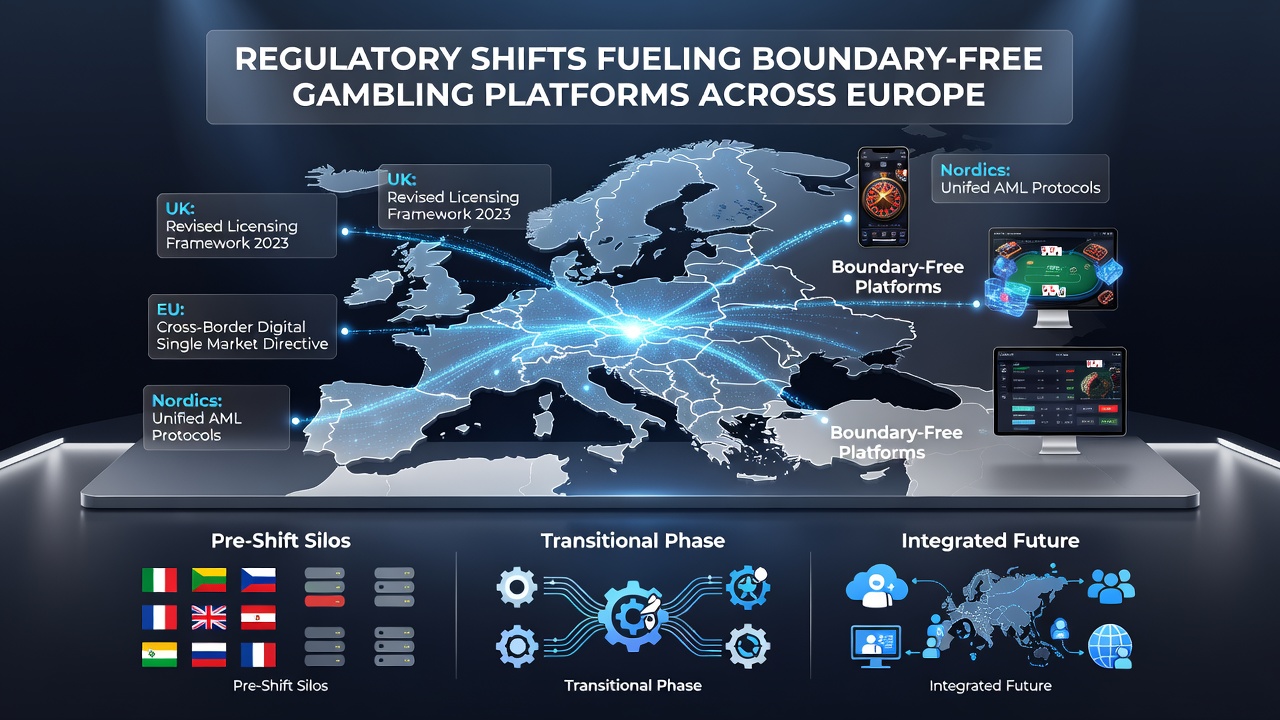
Operators now integrate real-time monitoring tools that adjust boundaries dynamically based on transaction histories, a practice that gained traction after several national authorities issued guidance in late 2025. Those who've examined licensing data observe that applications for unlimited wagering modules rose notably in markets like Estonia and Latvia where digital infrastructure supports rapid compliance checks. What's interesting is how these tools reduce administrative burdens for regulators while enabling platforms to maintain continuous service across multiple time zones.
Cross-Border Dynamics and October 2026 Developments
By October 2026 further alignment is scheduled under revised digital services frameworks that aim to standardize reporting for high-volume transactions. National regulators in France and Belgium have already begun pilot programs that test shared databases for tracking player activity across borders, according to preliminary findings released by the French gambling authority ARJEL. Such pilots demonstrate how technical interoperability can support platforms that function without traditional geographic boundaries while preserving data protection standards.
Industry organizations including the Remote Gambling Association have published case studies showing that operators adopting these boundary-free models report higher retention rates in test markets, though aggregate figures vary by implementation speed. External factors such as currency fluctuations and technological upgrades also influence rollout timelines, with several platforms preparing infrastructure upgrades ahead of the October 2026 milestones.
Conclusion
Regulatory shifts across Europe continue to create conditions for boundary-free gambling platforms through targeted policy updates, technological integration, and scheduled harmonization steps. Data from multiple government agencies and research bodies illustrate steady progress toward unified frameworks that balance operator flexibility with oversight mechanisms. As October 2026 approaches, ongoing pilots and licensing expansions will likely shape the next phase of platform development in this sector.