16 Oct 2026
Louisiana Gaming Revenue Hits $195.5 Million in September 2026 as Districts Post Varied Gains

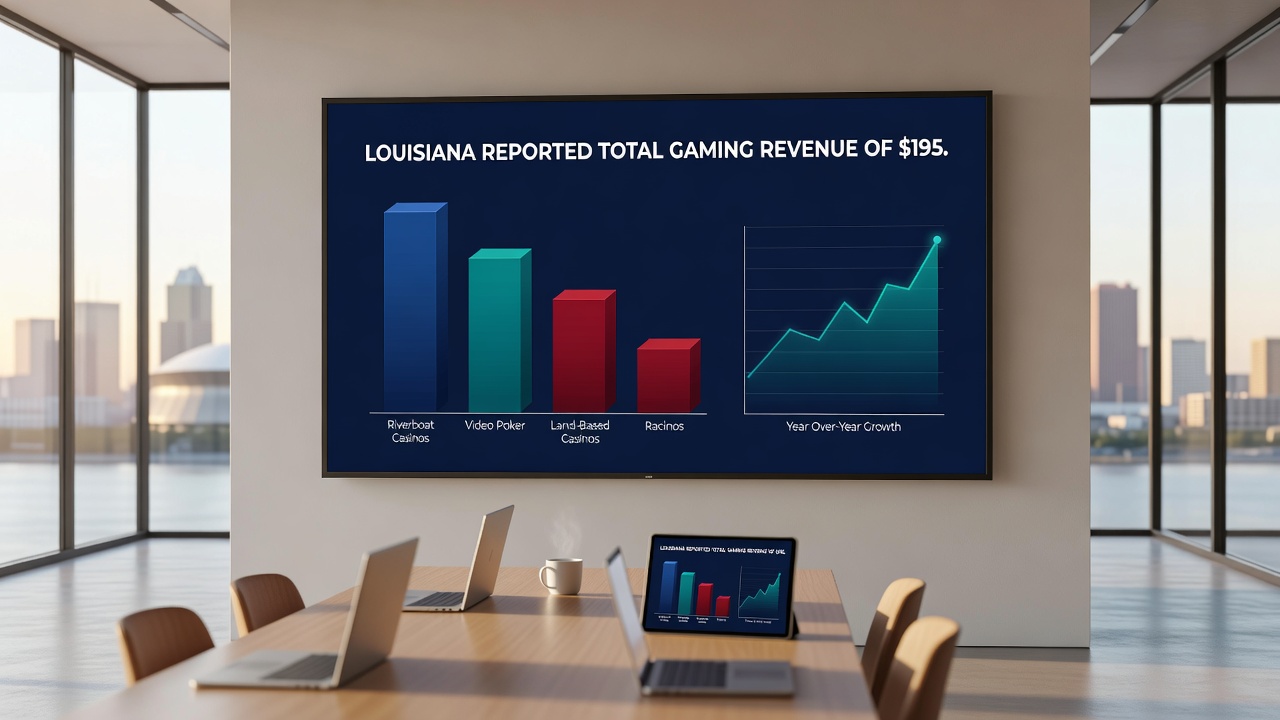
September 2026 delivered a total of $195.5 million in gaming revenue across Louisiana, and the 11.8 percent year-over-year rise shows continued expansion in the state's regulated markets. Observers note that three primary districts accounted for the bulk of activity, while sports betting contributed a separate $45 million slice that slipped 7 percent from the prior year. The figures, released in early October 2026, provide a clear snapshot of how regional performance shapes overall results.
District Performance Breaks Down Along Clear Lines
Lake Charles led all regions with $69.7 million, a 9.4 percent increase that still outpaced the statewide average in absolute dollars. New Orleans followed at $50.4 million, reflecting a 13.8 percent jump that outstripped Lake Charles in growth rate. Shreveport and Bossier City combined for $47.6 million, marking the strongest percentage gain at 15.9 percent and closing the gap on the top two districts. These three areas together generated the majority of the $195.5 million total, leaving smaller venues and tribal properties to fill the remainder.
Data indicates the varying growth rates stem from differences in visitor traffic and game mix. Lake Charles maintained its position as the largest single contributor even though its percentage increase trailed the other two major markets. New Orleans and the Shreveport-Bossier City corridor posted quicker expansions, which narrowed the distance between first and third place. Analysts tracking monthly reports point out that such shifts often reflect seasonal travel patterns and promotional calendars rather than permanent changes in market share.
Sports Betting Shows Separate Trajectory
Sports betting produced $45 million during the month, a figure that stands apart from the broader gaming total yet remains integrated into statewide oversight. The 7 percent year-over-year decline contrasts with the overall revenue increase, highlighting how different segments can move in opposite directions within the same reporting period. Figures reveal that sports betting has grown into a meaningful component of Louisiana's gaming landscape since its legalization, yet monthly results continue to fluctuate with major sporting calendars and promotional offers.
Those who monitor the sector note that the $45 million total still represents a substantial share of activity even after the dip. The decline did not offset the gains posted by traditional casino games across the three main districts. Instead, the sports betting number sits alongside the $195.5 million figure as a distinct but related data point that regulators and operators review each month.
October 2026 Context Places September Results in Perspective
By the time October 2026 began, stakeholders had already started comparing September's numbers against both the prior month and the same period in 2025. The 11.8 percent statewide increase builds on earlier gains recorded throughout the summer, creating a multi-month trend line that operators use to adjust staffing and marketing plans. Reports issued in October typically include these year-over-year and month-over-month calculations, allowing market participants to track momentum without relying on estimates.
Observers note that October often brings its own events, including football season peaks that can influence sports betting handle. The September sports betting total of $45 million therefore serves as a baseline for measuring how October's schedule might alter that segment. Traditional casino revenue, meanwhile, tends to follow steadier patterns tied to regional tourism and local player activity rather than single sporting events.
Regional Comparisons Highlight Market Dynamics
Breaking the numbers further shows Lake Charles at roughly 35.7 percent of the statewide total, New Orleans near 25.8 percent, and Shreveport-Bossier City at about 24.4 percent. These proportions shift slightly each month depending on which district posts the strongest growth. The 15.9 percent rise in Shreveport-Bossier City narrowed its distance from New Orleans, while Lake Charles retained a comfortable lead in raw dollars despite the slower percentage increase.
Experts tracking these reports emphasize that absolute dollar amounts matter more for tax revenue and employment figures than percentage changes alone. A district that adds several million dollars in revenue generates more economic impact than one that posts a high percentage on a smaller base. Louisiana's regulatory framework distributes gaming taxes and fees according to these reported amounts, so the $195.5 million total directly informs state and local budgets for the coming quarter.
Conclusion
The September 2026 gaming revenue report captures a single month within a larger pattern of expansion across Louisiana's regulated markets. Lake Charles, New Orleans, and Shreveport-Bossier City delivered the primary contributions, each posting gains that combined for an 11.8 percent statewide increase to $195.5 million. Sports betting added $45 million under a separate but related tracking system. Data released in October 2026 places these results alongside prior periods, giving operators and regulators concrete numbers for planning and oversight. The figures underscore how individual district performance and segment-specific trends together shape Louisiana's overall gaming economy.